You Won’t Believe What This Tiny NZ Town Hides
Nestled where the mountains kiss the sea, Picton, New Zealand, surprised me in ways I never expected. Far from just a ferry stop, it’s a compact urban gem buzzing with life, color, and quiet charm. Walking its streets, I discovered how small-town energy and natural beauty blend seamlessly. This isn’t just a gateway—it’s a destination that pulses with authenticity, local flavor, and unexpected moments. Let me take you through the real Picton.
First Impressions: More Than Just a Ferry Hub
For many travelers, Picton appears on the itinerary as a transit point—a necessary pause between the North and South Islands via the iconic Interislander ferry. The journey across the Cook Strait delivers breathtaking views of rugged coastline and turquoise waters, and as the vessel glides into the sheltered harbor, the town unfolds like a postcard. Yet too often, visitors step off the boat, grab a coffee, and board the next train or bus without lingering. What they miss is a place that deserves more than a passing glance.
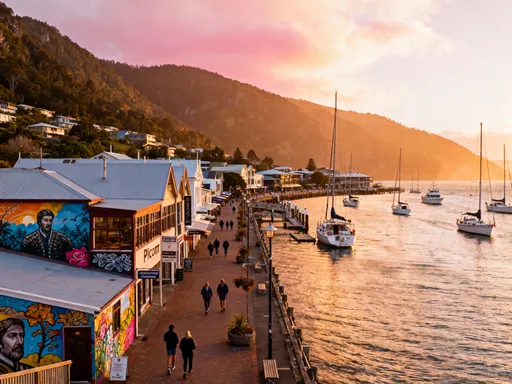
Picton’s initial charm lies in its scale. Compact and walkable, the town wraps around the edge of Queen Charlotte Sound, where forested hills rise dramatically from the water’s edge. Its main street, London Quay, runs parallel to the wharf, lined with low-rise buildings painted in soft coastal hues—creams, blues, and sage greens. There’s an immediate sense of order and calm, yet the town is far from sleepy. The air carries the faint tang of saltwater, mingling with the scent of freshly baked bread from a nearby bakery. Seagulls call overhead, and the occasional ferry horn echoes across the inlet, grounding the experience in maritime rhythm.
Reimagining Picton as a destination rather than a stopover transforms the travel narrative. Instead of measuring time by departure schedules, visitors begin to notice details: the way sunlight reflects off the harbor in the late afternoon, the clusters of locals chatting outside the bookstore, the hand-painted sign advertising homemade preserves at the corner market. These moments reveal a community rooted in place, one that thrives not despite its size but because of it. The shift from transit mindset to immersive exploration allows travelers to engage with the town’s heartbeat, discovering that sometimes the most meaningful journeys happen in the smallest spaces.
The Pulse of the Town: Exploring Picton’s Urban Core
Walking through Picton’s central district feels like stepping into a carefully composed vignette of small-town New Zealand life. The streets are designed for people, not cars—wide sidewalks, minimal traffic, and thoughtfully placed benches invite leisurely movement. London Quay and High Street form the primary commercial corridor, where locally owned businesses dominate the landscape. There are no chain stores or generic franchises; instead, the storefronts reflect a mix of practicality and artistry, from marine supply shops catering to sailors to boutique galleries showcasing regional pottery and woven textiles.
The architectural character is modest yet cohesive. Many buildings date from the mid-20th century, with simple lines and large windows that open onto the street. Canopies and awnings provide shade, while flower boxes overflow with geraniums and trailing ivy, adding bursts of color against neutral facades. Public spaces are integrated naturally into the urban fabric: a small plaza near the i-SITE visitor center doubles as a performance area during events, and a children’s playground sits just steps from the waterfront, ensuring families feel welcome. This attention to human-scale design fosters a sense of belonging, even for first-time visitors.
What stands out most is the ease of connection. Shopkeepers greet customers by name, and strangers exchange nods on the sidewalk. A woman pauses to point out a hidden mural tucked beside a café entrance—a whimsical depiction of native birds among kōwhai branches. Another resident offers directions with a smile, adding, “You’ll want to walk up to the lookout later—it’s magical at sunset.” These small interactions are not curated for tourists; they are part of the town’s everyday rhythm. In a world where many destinations feel increasingly homogenized, Picton’s authenticity is its quiet superpower.
Where Nature Meets Town: The Waterfront as Urban Living Room
If Picton has a soul, it resides along its waterfront. The promenade stretching from the ferry terminal to the marina functions as the town’s communal living room—a shared space where recreation, relaxation, and daily life converge. Morning joggers weave past dog walkers, while couples sip takeaway lattes on benches facing the sound. Cyclists glide along the paved path, and children skip stones at the water’s edge. Even in winter, when the hills wear a misty veil, the area hums with quiet activity.
The integration of natural and built environments here is masterful. The marina hosts a fleet of sailboats and fishing craft, their masts swaying gently with the tide. Floating pontoons provide access to moorings, and a small café perched on stilts over the water serves seafood chowder and flat whites to patrons watching the comings and goings. Just beyond, Queen Charlotte Park offers shaded walks beneath mature pōhutukawa and nikau palms, with picnic tables nestled among native shrubs. A boardwalk loops around a tidal inlet, where oystercatchers probe the mudflats at low tide.
This seamless blending of town and nature creates a rare kind of urban comfort. Residents don’t need to “escape” to find peace—their environment already provides it. For visitors, the waterfront offers a template for mindful travel: slow down, breathe deeply, observe. Whether watching a launch ferry passengers to a distant cove, sketching the silhouette of a ketch against the sky, or simply sitting in silence as the light shifts across the water, the experience is grounding. It reminds us that beauty doesn’t always require grand gestures; sometimes, it’s found in the ordinary rhythm of waves lapping against pilings.
Local Life in Motion: Markets, Events, and Community Spirit
No single event captures Picton’s spirit more vividly than the Saturday market, held in the town hall car park and spilling into adjacent streets. From 8 a.m. to 1 p.m., the space transforms into a vibrant tapestry of sound, scent, and color. Local growers display baskets of just-picked apples, feijoas, and heirloom tomatoes. Artisans sell hand-thrown ceramics, beeswax candles, and woolen scarves dyed with natural pigments. A musician strums a guitar in the corner, and the aroma of wood-fired pizza mingles with the sweetness of homemade jams.
The market is more than a shopping destination—it’s a social anchor. Neighbors reunite after weekday absences, children lick honey from wooden spoons at the apiary stall, and newcomers are welcomed with samples of seaweed pesto or lavender shortbread. Vendors speak knowledgeably about their products: a beekeeper explains the difference between mānuka and rewarewa honey, while a fisherman describes how he caught the blue cod fillets wrapped in paper on ice. These exchanges aren’t performative; they reflect a culture of transparency and pride in local provenance.
Seasonal events further animate the town. In summer, the Sounds of Summer concert series brings live music to the waterfront, drawing families with picnic blankets and foldable chairs. The Marlborough Seafood Festival, held every February, celebrates the region’s culinary heritage with cooking demonstrations, boat parades, and tastings of green-lipped mussels, Bluff oysters, and locally smoked salmon. Even smaller gatherings—like the annual Christmas light switch-on or the community clean-up day—strengthen bonds among residents. These moments reveal a town that invests in its collective well-being, where public space is not just maintained but actively inhabited and cherished.
Hidden Layers: Offbeat Spots That Define Character
Beyond the main thoroughfares and popular attractions, Picton reveals quieter layers to those willing to wander. One such gem is the Foreshore Walk, a gently graded trail that branches east from the waterfront and follows the curve of the bay. Under a canopy of flax and cabbage trees, the path offers solitude and intimate views of the sound. At low tide, a rocky shelf emerges, perfect for exploring tide pools teeming with anemones and tiny crabs. A wooden bench halfway along bears a plaque dedicated to a longtime resident, a subtle reminder that this place is loved deeply by those who call it home.
Another discovery is the Queens Beach Lookout, accessible via a short climb up Grove Road. The ascent is modest but rewarding: from the top, the entire harbor unfolds below, framed by forested ridges and scattered islands. On clear days, the distant peaks of the Richmond Range are visible, dusted with snow in winter. A pair of binoculars mounted on a tripod allows visitors to scan the water for dolphins or seals. It’s a spot that invites reflection, far from the bustle of daily life.
Lesser-known artistic touches also enrich the experience. Near the library, a bronze sculpture of a child reading a book sits on a stone plinth, a tribute to literacy and imagination. Along High Street, mosaic tiles embedded in the pavement depict native fish and birds, their colors glinting in the sun. These small-scale interventions don’t demand attention—they reward curiosity. They reflect a community that values subtlety, storytelling, and the quiet joy of discovery. In a world that often prioritizes spectacle, Picton’s charm lies in its understatement.
Getting Around and Staying Put: Practical Urban Comforts
One of Picton’s greatest strengths is its accessibility. The town is entirely walkable, with most accommodations, dining options, and attractions within a 15-minute stroll of the ferry terminal. For those arriving with luggage or seeking broader exploration, bike rentals are readily available at several outlets along the waterfront. Hybrid models with panniers cater to both casual riders and touring cyclists, and well-maintained paths connect key destinations, including the nearby vineyards of the Marlborough region.
Parking is manageable, with designated lots near the town center and clear signage guiding visitors. Public transit links are reliable: the InterCity and Ritchies bus services provide connections to Blenheim, Nelson, and beyond, while the coastal railway offers scenic journeys southward. For travelers with mobility concerns, many sidewalks are level and curb cuts are standard, though some older sections of town have slight inclines. The i-SITE center provides detailed maps and personalized advice, ensuring newcomers feel oriented and supported.
Accommodations range from waterfront motels with private decks to cozy bed-and-breakfasts nestled in quiet residential streets. Many properties emphasize sustainability, using solar heating, rainwater collection, and locally sourced breakfast ingredients. There are no high-rise hotels or sprawling resorts—instead, lodging options blend into the neighborhood fabric, preserving the town’s intimate scale. This integration enhances the sense of immersion, allowing guests to feel like temporary locals rather than transient observers. The absence of overwhelming tourism infrastructure makes Picton feel refreshingly uncontrived.
Why Picton Matters: A Model of Thoughtful Small-Town Design
Picton’s quiet excellence lies in its balance. It serves a functional role as a transport hub while nurturing a rich local life. It welcomes visitors without compromising its character. It integrates nature into daily living without turning the environment into a commodity. In an era when many communities struggle with overtourism, economic fragility, or urban sprawl, Picton offers a compelling alternative—a model of thoughtful, human-centered design.
The town embodies values that resonate deeply with today’s travelers: sustainability, authenticity, and connection. Its reliance on renewable energy initiatives, support for local agriculture, and commitment to waste reduction reflect a forward-thinking ethos. At the same time, its preservation of cultural heritage—through Māori place names, historical markers, and community-led conservation projects—grounds progress in respect for the past. These qualities are not marketed aggressively; they are lived.
For the 30- to 55-year-old woman managing a household, planning family trips, or seeking meaningful escapes, Picton represents a rare kind of destination. It is safe, unhurried, and rich with simple pleasures. It allows space for reflection, for conversation, for presence. It does not demand adrenaline or extravagance; it offers instead the luxury of time and the joy of discovery. In Picton, one learns that the most memorable journeys are not always the longest—they are the ones that touch the heart.
So the next time you see Picton on a map, don’t just pass through. Step off the ferry. Walk the streets. Taste the honey, climb the hill, sit by the water. Let the town reveal itself, layer by layer. Because behind its modest facade lies a story of resilience, care, and quiet beauty—one that reminds us all of what truly matters in the places we visit, and the lives we lead.