You Won't Believe What Lies Beyond the Blue Streets
Hidden in the Rif Mountains of northern Morocco, Chefchaouen isn’t just famous for its painted blue alleys—its wild, untamed nature is a revelation. I came for the colors but stayed for the canyons, waterfalls, and misty peaks. What I discovered wasn’t just beauty—it was a completely different side of Morocco, one that few travelers ever see. Beyond the postcard-perfect facades lies a landscape that pulses with life, where every trail leads deeper into silence, greenery, and ancient rhythms. This is not merely a destination; it is an awakening of the senses, a reminder that true travel begins where the pavement ends and the earth takes over.
The Town That Paints Your Soul Blue
Chefchaouen greets visitors like a dream washed in cerulean light. Nestled between rugged mountain folds, this small city in northern Morocco has become synonymous with its vividly painted medina, where nearly every surface—from doorways to staircases to alleyway walls—is bathed in shades of blue. The origin of this tradition is often traced to Jewish refugees who settled here in the 15th century, believing the color symbolized the sky and divine presence, a constant reminder of God’s watchfulness. Today, the blue streets serve as both spiritual echo and cultural signature, drawing photographers, artists, and curious wanderers from around the world.
Walking through the medina feels like stepping into a living canvas. The scent of mint tea drifts from open windows, while handwoven rugs and ceramic pottery line the narrow pathways. Locals move at a gentle pace, offering warm greetings and quiet smiles. There’s a tranquility here unlike any other Moroccan city—a calm that seems to seep from the very walls. Yet for all its charm, the painted town is only the threshold. Many visitors spend their days capturing perfect photos and sipping tea in sun-dappled squares, unaware that just beyond the city’s edge, an entirely different Morocco awaits.
What makes Chefchaouen truly special is not only its color but its position—perched at the gateway to some of North Africa’s most pristine wilderness. The Rif Mountains rise like ancient guardians, cloaked in pine forests, dotted with wildflowers, and threaded with hidden trails. While the medina offers beauty, the surrounding landscape offers transformation. It is here, where stone paths climb into the mist and birds cry from unseen cliffs, that the journey shifts from observation to immersion. The real story of Chefchaouen begins not in the town center, but in the wild silence that lies just a short walk from its blue heart.
Venturing Beyond the Medina Walls
Leaving the medina behind, the air changes. The scent of paint and spices gives way to damp earth, pine resin, and the faint mineral tang of mountain springs. Within minutes, the sounds of conversation and market haggling fade, replaced by the rustle of leaves and distant bird calls. This swift transition—from urban sanctuary to natural wonder—is one of Chefchaouen’s greatest gifts. Unlike many tourist destinations where nature feels distant or difficult to reach, here the wilderness begins at the city’s edge, welcoming those willing to step off the cobblestones and onto the trail.
Several well-marked paths lead directly from the outskirts of town into the surrounding hills. One popular route follows the riverbed just south of the medina, winding upward through olive groves and fig trees before opening into a valley framed by steep, forested slopes. These trails are maintained by local authorities and often supported by community-led tourism initiatives, ensuring that visitors can explore safely while minimizing environmental impact. Signposts appear at key junctions, and small stone markers guide the way, making navigation accessible even for those unfamiliar with mountain hiking.
For added confidence, many travelers choose to hire local guides—often young men raised in nearby villages who know the terrain like the lines on their palms. Their knowledge extends beyond directions; they share stories of seasonal changes, medicinal plants, and ancestral traditions tied to the land. This blend of safety, accessibility, and cultural connection makes venturing beyond the medina not only rewarding but deeply meaningful. It transforms a simple walk into a journey of understanding, where every footstep becomes a conversation with the mountain itself.
Responsible exploration is essential. As more visitors discover Chefchaouen’s natural side, the importance of preserving its fragile ecosystems grows. Travelers are encouraged to carry out all waste, avoid picking plants or disturbing wildlife, and stick to established trails. By moving with respect and awareness, we honor both the environment and the communities that have lived in harmony with it for generations. The beauty beyond the blue streets is not a backdrop—it is a living, breathing world that deserves our care.
The Magic of Akchour Waterfalls and Natural Pools
Among the most breathtaking natural attractions near Chefchaouen is the Akchour waterfall complex, a lush oasis tucked deep within the Rif Mountains. The journey to Akchour begins with a scenic drive or hike through terraced hillsides, where goats graze on rocky outcrops and farmers tend to centuries-old irrigation channels. As you approach, the sound of rushing water grows louder, echoing through the canyon like a call to adventure. What unfolds is a landscape of emerald pools, cascading falls, and dramatic rock formations, including the famous natural stone bridge known locally as God’s Bridge—a soaring arch that spans the river like something from legend.
The main waterfall plunges over 30 meters into a wide, clear pool below, creating a fine mist that cools the air even on warm days. Surrounding the falls is a dense canopy of trees—wild fig, oak, and tamarisk—whose roots cling to the cliffs, filtering sunlight into dappled patterns on the water’s surface. The pools are inviting, and many visitors wade in or swim during the summer months, enjoying the refreshing mountain water. Children laugh and splash under smaller cascades, while families picnic on shaded rocks, sharing bread, olives, and fresh cheese wrapped in cloth.
Reaching Akchour requires moderate physical effort, but the trail is well-trodden and manageable for most travelers. The hike from the parking area takes about 45 minutes to an hour, descending steadily through rocky terrain with occasional steep sections. Sturdy footwear is recommended, as some parts of the path can be slippery when wet. The best time to visit is between late spring and early autumn, when water flow is strong but temperatures remain pleasant. Early morning visits offer the added reward of solitude and golden light filtering through the trees, making it ideal for photography and quiet reflection.
To make the most of your trip, pack light but thoughtfully: bring water, a snack, a swimsuit if you plan to enter the pools, and a quick-dry towel. Avoid using chemical sunscreens or soaps in the water to protect the delicate ecosystem. Local vendors near the trailhead sell bottled water, fresh mint tea, and handmade crafts, offering a chance to support the community directly. Akchour is more than a scenic stop—it is a place where nature’s power and grace converge, reminding us of the simple joy of cool water, green shade, and the timeless rhythm of falling rain turned to river.
Hiking Through the Rif: Trails That Breathe Life
The Rif Mountains surrounding Chefchaouen offer a network of trails that cater to all levels of hikers, from gentle strolls to full-day treks. Each path reveals a new facet of this rich and varied landscape. One of the most accessible routes leads to Ras El Maa, the source of the town’s spring water, where a small waterfall emerges from the mountainside and feeds into a stone basin used by locals for centuries. The walk takes less than 30 minutes from the medina and passes through residential neighborhoods before opening into a peaceful grove of trees and wild herbs. It’s a favorite spot for families and elderly residents, who come to collect fresh water believed to have healing properties.
For those seeking a greater challenge, the ascent toward Jabal Lakraa—the highest peak near Chefchaouen—offers panoramic views that stretch across the Rif range and into the distant Mediterranean. The trail begins just east of town and climbs steadily through pine and juniper forests, with occasional clearings that provide sweeping vistas. At higher elevations, the air grows cooler and thinner, and the only sounds are the wind and the occasional cry of a raptor circling overhead. Reaching the summit rewards hikers with a sense of solitude and accomplishment, standing atop a world that feels untouched by time.
What sets these hikes apart is not just the scenery but the sensory richness they offer. The scent of thyme and rosemary rises from the sun-warmed rocks. Birdsong—woodpeckers, warblers, and hoopoes—fills the air. Butterflies flit between wildflowers, and lizards dart across the trail. Every step reveals textures: moss-covered stone, cracked earth, smooth river rock polished by centuries of water. This is not passive sightseeing; it is full-bodied engagement with the natural world, a chance to slow down and truly notice.
Local knowledge enhances the experience. Some guides carry baskets to show which plants are used for tea, medicine, or cooking—wild mint for digestion, artemisia for respiratory health, saffron crocus in season. These walks become lessons in resilience and adaptation, showing how life thrives even in rocky soil and dry summers. Whether you take a short loop or a full mountain ascent, hiking in the Rif is not just exercise—it is renewal. It clears the mind, strengthens the body, and reconnects us with the quiet pulse of the earth.
Sunrise Over Tetouan Valley: A Moment Frozen in Light
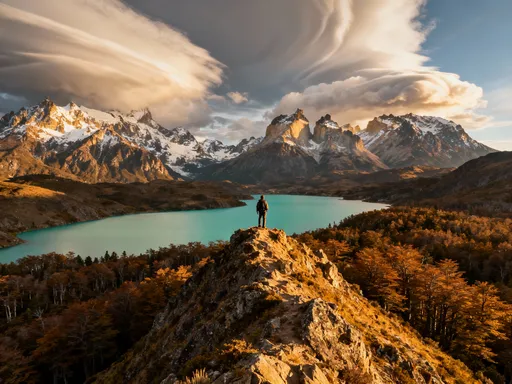
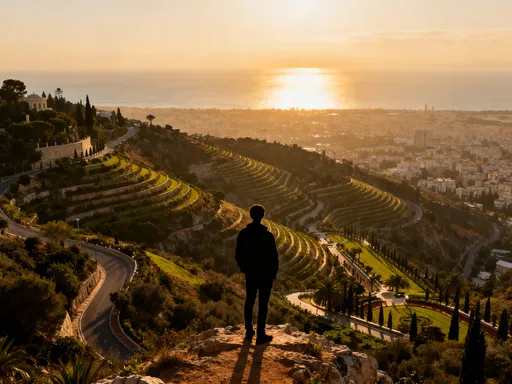
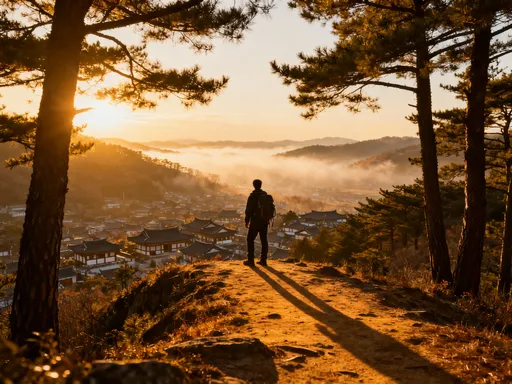
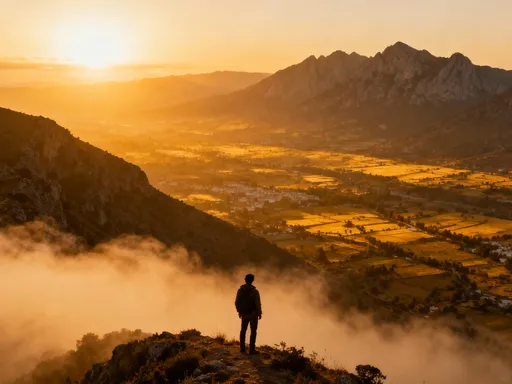
One of the most unforgettable experiences in the Chefchaouen region is watching sunrise from a high vantage point overlooking the Tetouan Valley. To reach such a spot, many travelers begin their hike in the pre-dawn darkness, headlamps casting small circles of light on the trail. The climb is quiet, almost meditative, with only the sound of footsteps and breath breaking the stillness. As the sky begins to lighten, the world slowly emerges from shadow—first as silhouettes, then as shapes, and finally in full color.
From the summit, the view unfolds like a tapestry. The valley stretches below, a patchwork of terraced fields, olive groves, and small villages connected by winding dirt roads. Mist curls around the lower slopes, glowing pink and gold in the first rays of sun. Distant peaks catch the light first, their ridges burning bright before the warmth spills downward. The air is crisp, carrying the scent of dew and pine. In that moment, time seems to pause. There is no rush, no noise, no demand—only the quiet majesty of a new day beginning in one of Morocco’s most beautiful landscapes.
This kind of experience cannot be rushed. It requires patience, preparation, and a willingness to step outside the comfort of routine. But the reward is profound. Unlike daytime sightseeing, where attractions are seen through the lens of crowds and schedules, dawn offers intimacy. It allows you to witness the land as it truly is—alive, changing, sacred. Photographers often capture stunning images, but even without a camera, the memory imprints deeply: the slow rise of light, the hush of the world waking, the feeling of being small in the best possible way.
For families and older travelers, this experience can be adapted. Some guesthouses and local guides offer sunrise treks with warm tea and blankets waiting at the top. The climb can be adjusted based on ability, and the shared silence among fellow travelers creates a sense of quiet camaraderie. Watching the sun rise over Tetouan Valley is not just a scenic highlight—it is a reminder that beauty often comes to those who wait, who rise early, who are willing to walk in the dark to meet the light.
Nature Meets Culture: How Locals Live With the Land
The people of the Rif Mountains, primarily Amazigh (Berber) communities, have lived in harmony with this rugged landscape for centuries. Their way of life reflects a deep understanding of balance—how to take from the land without depleting it, how to build with what is available, and how to pass knowledge from one generation to the next. In villages surrounding Chefchaouen, sustainability is not a modern concept but a daily practice rooted in necessity and respect.
One of the most visible examples is the traditional water management system. Natural springs are channeled through stone aqueducts and clay pipes to irrigate terraced fields and supply homes. These systems require constant maintenance, often done communally, ensuring that every family has access to clean water. Farmers grow a variety of crops—wheat, barley, tomatoes, and herbs—using methods that conserve soil and moisture. Goats and chickens roam freely, providing milk, meat, and eggs with minimal environmental impact.
Herbal knowledge is another cornerstone of local life. Women in the villages often gather wild plants to make teas and remedies—thyme for coughs, sage for digestion, chamomile for sleep. These traditions are not marketed as tourist attractions but are part of everyday wellness. Some families welcome visitors to join them in the fields or kitchens, sharing meals and stories over steaming glasses of fresh mint tea. These moments offer a rare glimpse into a culture that values simplicity, hospitality, and connection to the earth.
Travelers can support these communities by choosing locally owned guesthouses, eating at family-run restaurants, and purchasing handmade crafts directly from artisans. When tourism is managed with care, it becomes a force for preservation rather than disruption. The relationship between people and nature in the Rif is not static—it evolves, but its core remains: a commitment to living well within the limits of the land. By witnessing and honoring this balance, visitors gain more than memories—they gain perspective.
Why This Journey Changes How You See Morocco
Most international travelers associate Morocco with bustling souks, golden deserts, and coastal medinas like Marrakech or Casablanca. These places are undeniably vibrant, but they represent only one facet of a deeply diverse country. Chefchaouen and its surrounding wilderness reveal another Morocco—one of quiet mountains, flowing rivers, and resilient communities living in tune with nature. This contrast is not just geographical; it is emotional and spiritual. Where cities energize, the Rif Mountains restore.
The true essence of Chefchaouen lies not in its blue walls, but in what lies beyond them. The color draws you in, but the landscape changes you. It teaches patience, presence, and humility. It shows that beauty is not always loud or crowded—it can be found in a single drop of water falling from a leaf, in the sound of wind through pines, in the smile of an elder offering tea after a long walk. This is travel at its most transformative: not about checking destinations off a list, but about allowing places to reshape how you see the world.
For women between 30 and 55—many of whom balance family, work, and personal well-being—this kind of journey offers something rare: space. Space to breathe, to reflect, to reconnect with oneself away from daily demands. The trails of the Rif do not ask for productivity; they ask only for attention. They invite you to move slowly, to notice details, to be present. And in that presence, healing happens—not as a dramatic event, but as a quiet unfolding.
As tourism continues to grow, it is crucial that we protect places like Chefchaouen and Akchour by traveling responsibly. This means choosing eco-conscious accommodations, respecting local customs, and leaving no trace. It means looking beyond the Instagrammable moment to seek deeper understanding. The wild heart of Morocco is not a commodity—it is a gift, one that thrives when met with reverence and care.
So let the blue streets be your beginning, not your end. Step beyond the paint, follow the river, climb the trail, and let the mountains speak. Because what lies beyond the blue is not just scenery—it is a different way of being. And sometimes, all it takes is a single sunrise over the valley to remind us who we are when we are truly alive.