You Won’t Believe What This City Hides in Plain Sight
San José, Costa Rica, isn’t just a stopover—it’s a visual treasure. Between the bustling markets and leafy plazas, its streets whisper stories through color, texture, and form. As a photographer, I went looking for landmarks but found something richer: architecture that blends colonial charm with Art Deco flair and bold modern murals. Each corner reveals a different era, a different mood. This city doesn’t shout—it speaks in details. If you know where to look, San José offers some of the most unexpected and photogenic urban scenery in Central America.
First Impressions: Why San José Surprised Me
Like many travelers, I arrived in San José with low expectations. It was a transit point, a necessary pause before heading to the cloud forests of Monteverde or the Pacific beaches. I had heard it described as chaotic, congested, and unremarkable—a city defined more by traffic jams than charm. But within an hour of stepping out with my camera, my assumptions began to unravel. The city didn’t reveal itself all at once; it unfolded slowly, like the pages of an old book whose spine had just been cracked open.
What struck me first wasn’t grand monuments, but the quiet elegance of everyday details. A wrought-iron balcony wrapped in bougainvillea, its curved railings echoing 19th-century European design. A weathered wooden door, painted in faded turquoise, with hand-carved motifs around the frame. These weren’t tourist attractions—they were lived-in, overlooked, yet deeply expressive. I realized that San José wasn’t hiding its beauty; it was simply not advertising it. The city rewards attention, not haste.
Photography became my lens into understanding. Where others saw urban clutter, I began to see rhythm—the symmetry of shuttered windows, the repetition of tiled roofs, the balance between shadow and sunlight on textured walls. I found myself drawn to the poetry of decay: peeling paint that revealed layers of history, crumbling stucco that framed a perfect shot. Each photograph told a story not just of architecture, but of time, resilience, and cultural fusion. San José, I realized, wasn’t a city to pass through. It was a city to study, to feel, to capture frame by frame.
The Heart of the City: Central Market & Barrio Amón
To understand San José’s architectural soul, one must walk between its contrasts. Few places illustrate this better than the pairing of Mercado Central and Barrio Amón. They are less than a mile apart, yet they feel like different centuries. The market pulses with life—a sensory overload of spices, fresh fruit, handwoven baskets, and the sizzle of casados on griddles. Vendors call out in rapid Spanish, chickens cluck in wooden crates, and the air is thick with the scent of coffee and ripe mango. It’s chaotic, yes, but beautifully so. Every stall is a composition waiting to be framed: stacked pyramids of citrus, ribbons of dried chilies, the glint of gold jewelry under fluorescent light.
Just a short walk away, Barrio Amón offers a different rhythm. Once home to the city’s coffee barons, this neighborhood is a preserved gem of late 19th-century architecture. The houses here are wooden, painted in soft pastels—mint green, butter yellow, dusty rose—with wide wraparound porches supported by slender columns. Many feature Caribbean influences, brought by architects and builders who had worked in the port cities. The intricate fretwork, known as calados, is delicate and precise, often resembling lace carved from cedar. Iron railings, now rusted in places, add a touch of industrial elegance.
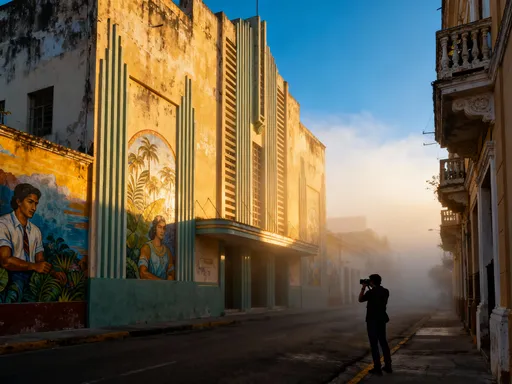
For photographers, timing is everything. I found the early morning light in Barrio Amón to be transformative. Around 6:30 a.m., a soft mist often lingers, diffusing the sun and casting a dreamlike glow on the wooden facades. The streets are quiet, the only sound the occasional footsteps of a dog walker or the creak of a porch swing. This is when the neighborhood feels most alive with memory. By midday, the sun flattens the textures; by evening, shadows grow long and dramatic. But that golden hour before sunset? That’s when the colors deepen, when the paint seems to glow from within, and when the past feels closest.
Colonial Echoes and Art Deco Gems
San José’s architectural identity is a layered one, and nowhere is this more evident than in its surviving colonial and Art Deco buildings. The colonial era left behind thick stucco walls, red-tile roofs, and central courtyards designed to keep interiors cool. Though much of the original colonial fabric has been lost to modernization, pockets remain, especially in the older barrios. These buildings often feature arched doorways, small-paned windows, and interior patios where families once gathered. The colors are typically earthy—ochre, terracotta, olive green—grounded and warm, blending with the surrounding hills.
But it’s the Art Deco period that truly surprised me. Between the 1920s and 1940s, San José experienced a building boom, and many structures from that era still stand, often hidden in plain sight. Look closely at the facades along Avenida Central or Calle 3, and you’ll find geometric patterns in relief, stepped parapets, and streamlined curves that echo the Machine Age. Pastel tones—pale pink, seafoam green, soft lavender—are common, a nod to tropical light and modernist optimism. Some buildings even feature decorative motifs like sunbursts or stylized flora, carved into concrete or stucco.
The challenge for photographers is spotting these gems amidst the urban clutter. Modern shops, neon signs, and power lines often obscure the original architecture. My strategy was simple: slow down, look up, and use a telephoto lens to isolate details. Framing a single Art Deco window, excluding the modern signage below, could turn an ordinary street into a time capsule. I also learned to shoot from low angles, emphasizing the verticality of these buildings, or use reflections in puddles or glass to create abstract compositions. The city doesn’t always make it easy, but the rewards are worth the patience.
Modern Contrasts: Brutalism and Urban Renewal
While San José honors its past, it is also a city in motion, and its modern architecture tells a story of progress and public ambition. Nowhere is this more evident than around the Plaza de la Cultura, where the opulent National Theater stands like a neoclassical crown next to stark, imposing government buildings. The contrast is intentional, even poetic. The theater, completed in 1897, is a masterpiece of European-inspired design—marble columns, gilded balconies, a domed ceiling painted with mythological scenes. It was funded by a tax on coffee, a symbol of national pride and cultural aspiration.
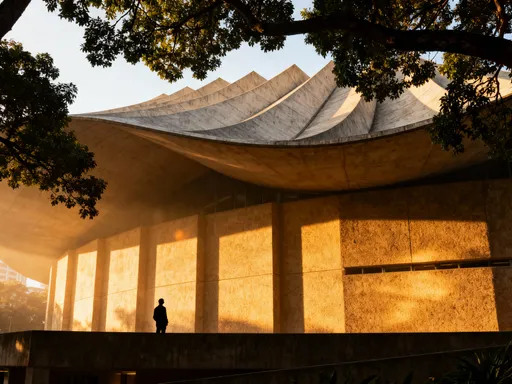
Just across the plaza, the Ministry of Health and other civic structures rise in raw concrete, angular forms, and massive scale—hallmarks of Brutalist architecture. These buildings, constructed in the mid-20th century, reflect a different kind of idealism: one rooted in functionality, order, and social progress. Their surfaces are textured, their lines unapologetically heavy, and their presence undeniably powerful. At first glance, they may seem cold or even oppressive. But through a photographer’s eye, they transform. The play of light on rough concrete creates dramatic shadows. Rainwater streaks down the walls, adding depth and movement. Wide staircases and deep overhangs offer geometric compositions that feel almost sculptural.
I found that the best time to photograph these structures was mid-morning or late afternoon, when the sun hits the facades at an angle. Harsh midday light tends to flatten the textures, but when the sun is lower, the grooves and ridges cast long, expressive shadows. I often used a polarizing filter to reduce glare and enhance contrast. Shooting from a low angle emphasized the monumentality, while close-ups of concrete details turned them into abstract art. These buildings may not be beautiful in the traditional sense, but they are honest, and that honesty is compelling. They speak of a city that isn’t afraid to show its bones.
Street Art as Living Architecture
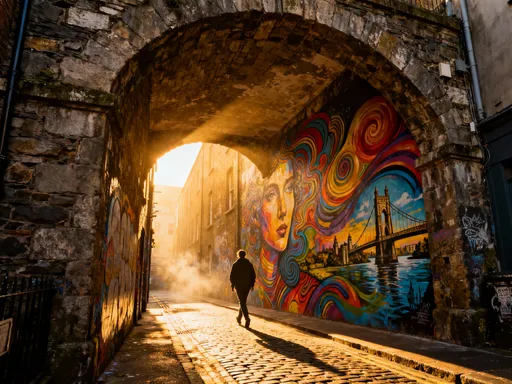
If San José’s older buildings tell stories of the past, its street art tells the story of the present. Across the city, blank walls have become canvases for powerful, large-scale murals. Unlike random graffiti or tagging, much of this work is commissioned, thoughtful, and deeply connected to local identity. The themes are rich: indigenous heritage, environmental protection, social justice, and national pride. One mural in Barrio Escalante, for instance, depicts a young girl holding a quetzal bird, her hair woven with native flowers. Another, near the university, shows a mosaic of faces from different ethnic backgrounds, united by a single green wave—a symbol of Costa Rica’s commitment to sustainability.
Neighborhoods like Barrio Escalante and La California have become open-air galleries. The art here doesn’t feel imposed; it feels integrated. Murals wrap around corners, interact with architectural features, and even incorporate shadows and light into their design. Some artists use trompe-l’oeil techniques to create the illusion of depth, making walls appear to recede or bulge. Others paint entire buildings as single compositions, turning entire blocks into immersive experiences.
Photographing these murals requires more than just pointing and shooting. Perspective matters. I often arrived early to scout the best angles, sometimes returning at different times of day to see how light changed the mood. A mural that looks flat at noon might come alive in the golden hour, when shadows add dimension and colors deepen. I also paid attention to context—including a passerby, a street vendor, or a bicycle in the frame could add narrative depth. Most importantly, I respected the artists’ work. I never touched the walls, avoided blocking access, and when possible, I sought out information about the creators. Many murals include QR codes or plaques, linking to artist statements or community projects. This isn’t just decoration—it’s dialogue.
Practical Photography Tips for San José
For anyone planning to photograph San José, preparation is key. The city is walkable but uneven, with steep sidewalks, sudden hills, and occasional potholes. I recommend traveling light. A lightweight mirrorless camera with a 35mm or 50mm prime lens is ideal for street photography—close enough for intimacy, wide enough for context. These lenses also perform well in low light, which is useful in shaded plazas or narrow alleys. While zoom lenses offer flexibility, they often lead to hesitation. A prime lens forces you to move, to engage, to get closer—and that’s where the best shots often happen.
Safety is another consideration. San José is generally safe for tourists, but like any urban center, it has areas where caution is wise. I always kept my camera in a secure crossbody bag when not in use, especially on buses or in crowded markets. When shooting, I preferred to go handheld, but I stayed aware of my surroundings. I avoided displaying expensive gear unnecessarily and never left equipment unattended. In busy areas, I used a wrist strap as an extra precaution. Most locals are friendly and curious about photography—many will smile or pose if you make eye contact and ask politely.
Weather also plays a role. San José has a mild climate, but it rains frequently, especially from May to November. I always carried a small rain cover for my camera and wore a lightweight waterproof jacket. Cloud cover, often seen as a nuisance, can actually be a photographer’s ally. Overcast skies provide soft, even lighting, perfect for capturing colors and textures without harsh shadows. On sunny days, I used the midday light creatively—shooting silhouettes, reflections, or high-contrast compositions in plazas where shadows created natural frames. Early mornings and late afternoons remained my favorite times, offering the richest light and the quietest streets.
Why This City Deserves Your Lens
Costa Rica is famous for its natural beauty—its rainforests, volcanoes, and beaches. But San José offers something different: the beauty of human creation, of cultural memory, of urban life in motion. It’s a city that doesn’t rely on postcard perfection. Instead, it invites you to look deeper, to appreciate the quiet details, the layers of history, the resilience of a place that has evolved without losing its soul. To photograph San José is not just to document buildings, but to capture the rhythm of daily life, the pulse of a capital that balances tradition and change.
Its architecture reflects the national character: progressive yet rooted, diverse yet harmonious, practical yet beautiful. You see it in the way a colonial courtyard coexists with a modern mural, or how a Victorian porch hosts a family breakfast while a muralist paints nearby. This isn’t a city of monuments frozen in time. It’s a living, breathing environment where the past is not preserved behind glass, but woven into the present.
For travelers, this means an invitation to slow down. Put away the checklist. Walk without a destination. Let your eyes wander from street level to rooftop, from paint chips to grand facades. Carry a camera not to capture everything, but to focus on what matters—the texture of a wall, the curve of a staircase, the way light falls on a quiet corner. In San José, the most memorable images aren’t the ones you plan. They’re the ones you discover.
So the next time you pass through, don’t treat it as a stopover. Treat it as a destination. Bring your lens, your curiosity, and your patience. Look closely. Listen to what the city whispers. Because San José isn’t hiding its treasures. It’s waiting for someone to see them.