You Won’t Believe What I Found in Seville’s Hidden Urban Corners
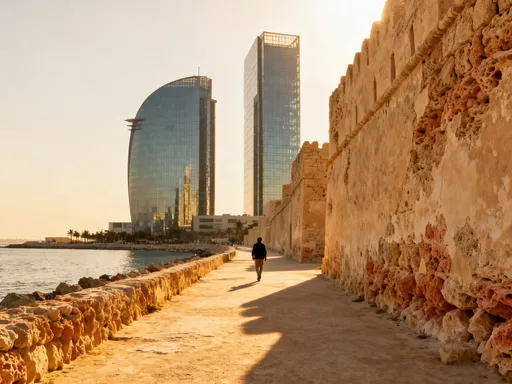
Seville isn’t just about flamenco and orange-scented streets—there’s a quieter, more personal side hiding in plain sight. I wandered off the postcard paths and discovered urban spaces where time slows down, light dances on cobblestones, and locals sip coffee like nothing else matters. These aren’t tourist spots; they’re pieces of real life. If you’re looking for authenticity in a city that wears its heart on its sleeve, this is where Seville truly speaks.
The Pulse of Seville: Why Urban Spaces Tell the Real Story
Seville’s soul doesn’t reside solely in its grand monuments like the Giralda or the Real Alcázar. Instead, it pulses through the rhythm of daily life—the hum of conversation in a shaded plaza, the clink of spoons stirring café con leche, the slow unfurling of morning light across weathered tiles. These urban spaces, often overlooked by guidebooks, are where the city breathes most naturally. They offer more than aesthetic charm; they reveal how Sevillanos live, connect, and preserve their identity amidst centuries of change. Urban design here isn’t just functional—it’s deeply emotional, shaped by climate, history, and a cultural love for communal living.
What makes these spaces so powerful is their intimacy. Unlike the curated experience of major attractions, these corners unfold organically. A narrow alleyway may open unexpectedly into a sun-drenched courtyard. A quiet bench beneath a bougainvillea-draped wall becomes a stage for elderly neighbors sharing stories. These moments aren’t staged; they’re lived. The city’s layout, with its labyrinthine streets and inward-facing homes, encourages slowness and observation. Travelers who embrace this pace often find themselves slipping into the city’s natural rhythm, no longer observers but temporary participants in its daily choreography.
Moreover, Seville’s urban fabric reflects a deep understanding of climate-responsive design. The orientation of plazas, the use of thick whitewashed walls, and the prevalence of shaded patios are not merely decorative—they are centuries-old adaptations to the Andalusian heat. These design choices create microclimates of comfort, allowing outdoor life to thrive even in the height of summer. For visitors, this means discovering cool refuges tucked behind unassuming doors, or finding relief under the canopy of a centuries-old plane tree in a neighborhood square. It’s a city that rewards curiosity and patience, offering its truest self not to those who rush, but to those who wander with intention.
Santa Cruz: A Maze with a Memory
Santa Cruz, once the heart of Seville’s Jewish quarter before the 14th century, is now one of the city’s most enchanting neighborhoods. Its narrow, winding streets form a living labyrinth where every turn reveals another layer of history. Whitewashed walls glow in the afternoon sun, and cascading bougainvillea spills over wrought-iron balconies. But beyond its postcard beauty, Santa Cruz holds a deeper resonance—it’s a place where memory is embedded in the architecture. The neighborhood’s layout, with its tight alleys and hidden courtyards, reflects centuries of adaptation, survival, and cultural blending.
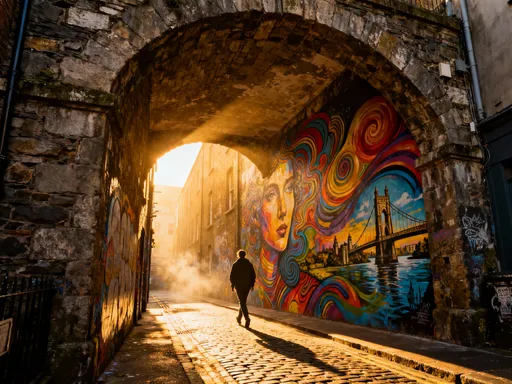
Walking through Santa Cruz feels like moving through time. Some doorways still bear faint traces of mezuzah placements, silent markers of a once-thriving Jewish community. Others open into serene patios where fountains trickle and geraniums bloom in clay pots. These spaces, though now part of tourist routes, were once private sanctuaries, designed to shield families from the heat and the outside world. The very act of getting lost here is part of the experience—there are no straight lines, few maps can fully capture its twists, and GPS often falters. Yet, this disorientation is not frustrating; it’s liberating. It forces the visitor to slow down, to look up, to notice the details: a carved stone fountain, a patch of azulejo tiles, the sound of a guitar drifting from an open window.
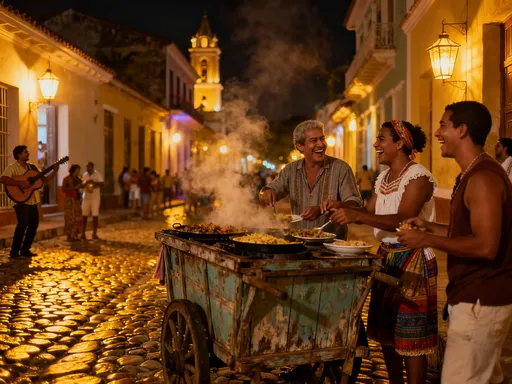
Today, Santa Cruz balances its historical weight with modern vitality. Artisans sell handmade fans and ceramics in tiny boutiques, while traditional tapas bars serve montaditos and manzanilla to locals who have come here for generations. The neighborhood is no longer isolated—it’s embraced by the city and by visitors—but it retains a sense of privacy, as if guarding its stories carefully. For the thoughtful traveler, Santa Cruz offers more than scenery; it offers a conversation with the past, one whispered through archways and echoed in the footsteps on ancient stone.
Plaza de Cristo de Burgos: Morning Light and Local Life
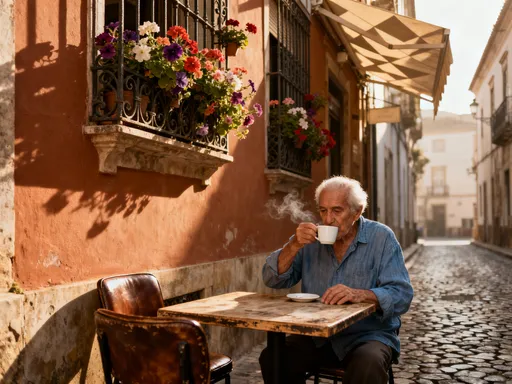
Nestled within the Santa Cruz neighborhood, Plaza de Cristo de Burgos is a small, unassuming square that comes alive with quiet grace each morning. Far from the crowds that gather at the cathedral or the Alcázar, this plaza belongs to the residents. At dawn, the first light filters through the orange trees, casting long shadows across the cobblestones. Elderly neighbors step out in slippers and housecoats, exchanging warm buenos días as they take their usual seats at the small café that opens early. The air carries the scent of freshly fried churros and strong coffee—a simple, comforting ritual that has changed little over decades.
This plaza is not listed in most travel guides, and few tourists stumble upon it by accident. Its charm lies precisely in its ordinariness. There are no grand monuments, no ticketed attractions—just a modest statue of Christ, a few benches, and a single bar that serves as the neighborhood’s living room. Children on their way to school pause for a quick chocolate con churros, while older residents linger over newspapers and gossip. The pace is unhurried, the interactions familiar. It’s a space where community is not performed but lived, where the rhythm of the day unfolds without spectacle.
What makes Plaza de Cristo de Burgos so special is its authenticity. In a city increasingly shaped by tourism, this square remains untouched by commercialization. The café still uses mismatched cups and saucers, the counter is worn smooth by years of elbows, and the owner knows every regular by name. For visitors who find their way here, it offers a rare glimpse into Seville’s heart—not as a destination, but as a home. Sitting here with a small coffee, watching the morning unfold, one begins to understand that the city’s true richness lies not in its grandeur, but in these small, sacred routines.
The Alameda de Hércules: Where Old Meets Lived-In Cool
Stretching north from the historic center, the Alameda de Hércules is one of Europe’s oldest planned boulevards, dating back to the 16th century. Originally designed as a grand promenade for Seville’s aristocracy, it has transformed over centuries into a vibrant, eclectic public space. Today, it pulses with a different kind of energy—one rooted in creativity, diversity, and everyday life. Flanked by two towering Roman columns, the wide avenue is lined with indie cafés, vintage clothing stores, and murals that shift with the seasons. It’s a place where students, artists, and young families gather, not to see a monument, but to be part of the city’s evolving story.
The Alameda’s transformation reflects broader changes in Seville. Once a symbol of elite leisure, it now belongs to the people. On weekend mornings, the central walkway becomes a market for local artisans and food vendors. In the evenings, terraces fill with groups sharing tapas and glasses of rebujito. The mix of languages—Spanish, English, French, Arabic—hints at the neighborhood’s growing cosmopolitanism. Yet, this modernity coexists with history. The original stone benches remain, and the plane trees planted centuries ago still provide dappled shade. The boulevard feels lived-in, not preserved—a rare example of urban space that evolves without losing its soul.
What makes the Alameda particularly appealing is its accessibility. Unlike more polished tourist zones, it doesn’t demand perfection from its visitors. You can come as you are—wearing sneakers, carrying groceries, pushing a stroller. The atmosphere is relaxed, inclusive, and refreshingly unpretentious. Street performers play flamenco fusion on guitar, while toddlers chase pigeons near the fountain. It’s a space that invites participation, not just observation. For travelers seeking to understand contemporary Seville, the Alameda offers a dynamic portrait of a city embracing change while holding on to its roots.
Hidden Patios: The Secret Gardens Behind Closed Doors
Every May, Seville celebrates the Fiesta de los Patios, a contest in which residents open their private courtyards to the public. These lush, intricately decorated spaces—filled with geraniums, jasmine, fountains, and hand-painted tiles—draw thousands of visitors. But for the rest of the year, most patios remain hidden, accessible only to family, friends, and the occasional invited guest. These private gardens are not just aesthetic marvels; they are essential to Seville’s urban identity. They represent a cultural commitment to privacy, beauty, and inner life—a counterpoint to the city’s often bustling exterior.
The tradition of the patio dates back to Roman and Moorish influences, when homes were designed around central courtyards to provide light, ventilation, and a private outdoor space. In Seville’s hot climate, these interiors became oases—cool, quiet, and rich with sensory detail. Even in modest homes, the patio is often the most cared-for space, tended daily with watering cans and pruning shears. The act of cultivating a patio is not just gardening; it’s an expression of pride, identity, and continuity. Many families pass down plantings and arrangements through generations, preserving both horticultural knowledge and emotional memory.
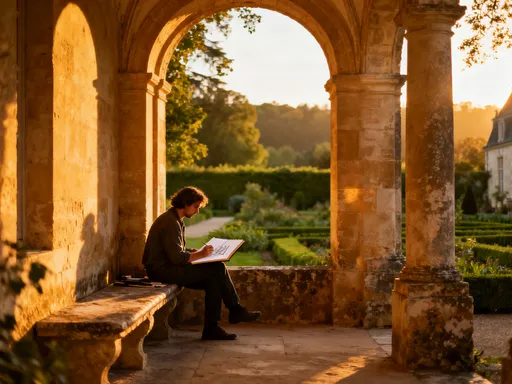
For travelers, catching a glimpse of a private patio—perhaps through an open gate or during a visit to a local’s home—is a rare privilege. These spaces redefine urban intimacy. In a world of shrinking personal space, Seville’s patios offer a model of how cities can support deep, meaningful living. They remind us that beauty doesn’t have to be public to be powerful, and that some of the most profound experiences happen behind closed doors. Even if you never step inside one, knowing they exist—thousands of secret gardens hidden within the city’s walls—adds a layer of mystery and warmth to every walk through Seville’s neighborhoods.
Parque de María Luisa: Not Just a Park, but a Urban Breath
Bordering the grand Plaza de España, the Parque de María Luisa is Seville’s most beloved green space. Designed in the early 20th century for the Ibero-American Exposition of 1929, it was intended as a gift to the city—a place where nature and urban life could coexist. Today, it fulfills that promise with grace. Spanning over 40 hectares, the park is a mosaic of formal gardens, shaded walkways, fountains, and quiet ponds. But more than its beauty, what makes María Luisa essential is its role as a social equalizer and a sanctuary from the city’s intensity.
From dawn to dusk, the park teems with life. Elderly couples stroll arm in arm along tiled pathways. Joggers weave through groves of orange and palm trees. Children laugh as they feed ducks or ride the small train that loops through the gardens. On weekends, families spread blankets under the trees for picnics, sharing bread, cheese, and wine in the dappled shade. The park belongs to everyone—locals and visitors, rich and poor, young and old. There are no gates, no fees, no exclusivity. It is, in the truest sense, a public good.
María Luisa also serves as Seville’s green lung, offering relief from the summer heat and the density of the urban core. Its trees lower temperatures, its fountains add humidity, and its open spaces allow for airflow through the city. But beyond its environmental function, it provides something harder to measure: peace. In a world that often feels hurried and fragmented, the park offers continuity and calm. Whether you’re sitting by the Fuente de los Niños Prodigiosos, watching the swans glide across the pond, or simply resting on a bench with a book, the park invites you to pause. It is not an escape from the city, but a vital part of it—a place where urban life finds balance.
Crossing the Guadalquivir: Bridges as Urban Connectors
The Guadalquivir River has shaped Seville’s destiny, serving as a trade route, a cultural boundary, and a source of inspiration. But it is the bridges that truly connect the city’s many identities. From the medieval Puente de Triana to the sleek Alamillo Bridge, each crossing tells a story of engineering, history, and human connection. They link the historic center to the modern districts, the tourist heart to the residential neighborhoods, the past to the present. To walk across one is not just to change location—it is to shift perspective.
The Puente de Triana, rebuilt in the 19th century after centuries of destruction by floods, remains one of the most iconic. It connects the center to the Triana neighborhood, once a community of potters and flamenco artists, now a vibrant mix of tradition and renewal. From its arches, the view of the cathedral and the Torre del Oro is postcard-perfect, but the real magic happens at dusk, when locals gather to watch the sky turn gold and the city lights flicker on. It’s a place of gathering, reflection, and quiet celebration.
Further downstream, the Alamillo Bridge, designed by Santiago Calatrava and completed in 1992, represents a different era. Its sweeping white arch and cable-stayed design symbolize Seville’s modern ambitions. While primarily a functional structure, it also serves as a landmark of innovation. From here, the view includes the Isla de la Cartuja, once a monastery, later an exposition site, now a hub for science and technology. The contrast between the two bridges—old and new, stone and steel—mirrors the city’s ability to honor its past while moving forward.
These bridges do more than span water; they weave the city together. They allow access, encourage exploration, and remind us that connection is the foundation of urban life. For the traveler, crossing them is a way to see Seville in layers—each step revealing a new facet, a different rhythm, a fresh understanding of what this city truly is.
Conclusion
Seville’s true magic isn’t in its monuments, but in the spaces between—where daily life unfolds quietly, beautifully. From the hushed mornings of Plaza de Cristo de Burgos to the vibrant energy of the Alameda de Hércules, from the hidden patios to the sweeping embrace of María Luisa, these urban moments reveal a city that values intimacy, continuity, and connection. They invite travelers not just to see, but to feel—to slow down, to listen, to participate in the quiet poetry of ordinary life.
In an age of checklist tourism, where landmarks are ticked off and photos uploaded within minutes, choosing to seek out these quieter corners is an act of intention. It’s a way of traveling deeper, of honoring the places we visit not as backdrops, but as living, breathing communities. Seville, with its layered history and warm, open spirit, rewards this kind of attention. It speaks in whispers, in glances, in the way sunlight hits a tile at three in the afternoon. To hear it, you must be willing to wander off the map, to sit still, to let the city reveal itself, one hidden corner at a time.