Taste the Rhythm: How Trinidad’s Festivals Turn Food into Fireworks
You know that feeling when music pulses through your streets, colors explode around you, and the smell of sizzling spices pulls you into a crowd? That’s Trinidad, Cuba—alive, loud, and delicious. I didn’t just visit during festival season—I tasted it. From sugar-dusted pastries at dawn to late-night bites of crispy fried malanga, every bite told a story. This is food not on plates, but in motion—shared, shouted, celebrated. In Trinidad, a UNESCO World Heritage site nestled along Cuba’s southern coast, tradition isn’t preserved behind glass. It’s fried in oil, grilled over open flames, passed hand to hand in banana leaves, and devoured with laughter under starlit skies. Here, festivals are not performances. They are living, breathing expressions of community, where rhythm and flavor move in perfect sync.
The Soul of Trinidad: Where Culture Simmers in Every Dish
Trinidad, a colonial gem frozen in time, rises from the lush valleys of central Cuba like a painted dream. Its cobblestone streets, worn smooth by centuries of footsteps, wind past pastel-colored homes with wooden shutters and wrought-iron grilles. Brightly colored doors open to courtyards where mango trees shade clay pots and roosters call at dawn. The town’s isolation—shielded by the Escambray Mountains to the north and the Caribbean Sea to the south—has protected its cultural integrity, allowing Afro-Cuban traditions to flourish without dilution. This preservation isn’t accidental; it’s intentional, rooted in pride and resilience.
What makes Trinidad unique is how seamlessly daily life and celebration intertwine. Unlike destinations where culture is packaged for tourists, here, festivals emerge organically from the community. They are not staged. They are lived. And at the heart of this lived experience is food. In Trinidad, cooking is not merely preparation—it’s participation. The scent of cumin, garlic, and slow-roasted pork drifting through alleyways during festival season is not for show. It is the aroma of devotion, of memory, of identity. Meals are not served on tables behind reservations but handed out on street corners, shared between neighbors, offered to strangers with a smile.
Every dish carries echoes of ancestry. The African influence is unmistakable—in the use of root vegetables like yuca and malanga, in the rhythmic pounding of dough, in the communal style of eating. Spanish colonial roots appear in the slow-cooked stews and the tradition of roasting whole animals. Yet, there is no rigid separation of these heritages. They have blended over generations into something uniquely Cuban, uniquely Trinitarian. To eat here is to taste history—not as a museum exhibit, but as a living, evolving narrative passed from grandmother to granddaughter, from street vendor to traveler.
Festival Seasons: When the Town Becomes a Street Kitchen
In Trinidad, the calendar is marked not by months but by rhythm and ritual. Two festivals stand out as transformative events: Carnaval and Semana Santa. During these times, the entire town becomes a stage, and every resident a performer. But unlike formal theater, the performance here is improvised, spontaneous, and deeply participatory. Streets once quiet with colonial elegance erupt into rivers of music, dance, and, most importantly, food.
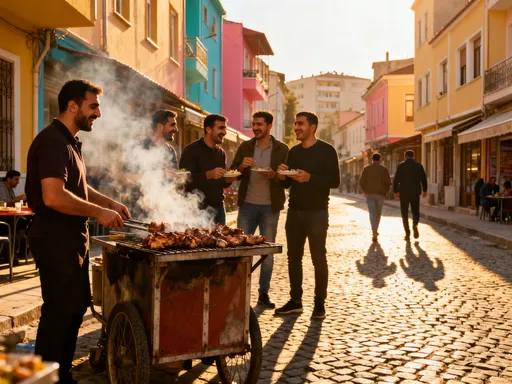
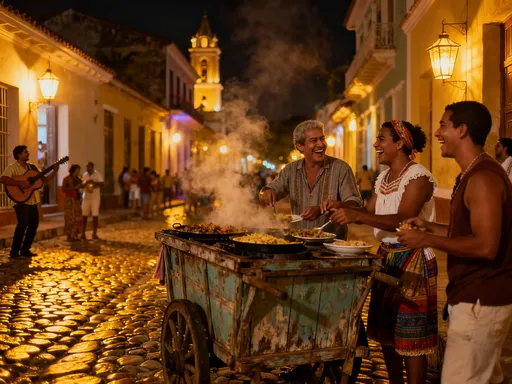
Carnaval, celebrated in June, is Trinidad’s most vibrant explosion of culture. Drums beat from sunrise to sunset. Conga lines snake through the Plaza Mayor, their rhythm infectious. And alongside the dancers, a parallel energy unfolds—one of sizzling grills, bubbling pots, and the constant exchange of food. Vendors push wheeled carts piled high with skewers of meat, baskets of fried dough, and stacks of paper-wrapped packages. Families set up temporary stalls outside their homes, turning doorways into impromptu restaurants. The air hums with the scent of garlic, citrus, and smoke.
Semana Santa, or Holy Week, offers a different but equally profound experience. While more solemn in tone, it is no less rich in culinary tradition. This religious observance, rooted in Catholic practice, has been deeply infused with local customs. Meals during this time often reflect abstinence—no meat on certain days—but this restraint gives rise to creativity. Fish stews simmer with coconut milk and spices. Fried plantains take center stage. Sweet rice pudding, or arroz con leche, is prepared in large batches, its creamy texture offering comfort amid reflection.
What unites these festivals is the idea that food is not an afterthought. It is central to the ritual. It is offering, gift, and symbol all at once. A plate of moros y cristianos—black beans and rice cooked together with garlic and bay leaf—is not just a meal. It is a gesture of welcome. A shared tamal, wrapped in corn husk and steamed to perfection, is an act of communion. These are not transactions. They are exchanges of trust, of belonging.
The Flavors That Rule the Streets: Must-Try Festival Foods
To walk the streets of Trinidad during festival season is to embark on a sensory journey. Every corner offers a new invitation to taste, to try, to remember. Among the most iconic dishes is lechón asado—slow-roasted pork, marinated in sour orange, garlic, and oregano, then cooked over wood fire for hours until the skin crackles and the meat falls apart. It is often served on thick slices of Cuban bread or wrapped in parchment paper, meant to be eaten with fingers, juices running down to the elbows.
Equally essential is moros y cristianos, a dish whose name—"Moors and Christians"—reflects Cuba’s complex history. Black beans and white rice are cooked together with onions, garlic, and a touch of cumin, creating a savory, slightly earthy flavor that grounds the feast. It is almost always present, a constant companion to grilled meats and fried sides. Fried plantains, or tostones and maduros, appear in both savory and sweet forms. Tostones—green plantains smashed and fried twice—are salty and crisp. Maduros—ripe plantains fried until caramelized—are soft, sweet, and deeply satisfying.
For handheld bites, croquetas are a favorite. These golden, breaded rolls are filled with creamy béchamel and shredded ham or fish, then deep-fried to a perfect crunch. They are ideal for eating on the move, passed from hand to hand during dance breaks. Tamales cubanos, unlike their Mesoamerican cousins, are made with a cornmeal dough stuffed with spiced pork, wrapped in corn husks, and steamed. They are dense, rich, and deeply flavorful—a portable feast in their own right.
And then there are the sweets. Pastelitos—flaky pastries filled with guava, cheese, or sweetened coconut—are dusted with powdered sugar and sold warm. Arroz con leche, simmered with cinnamon and vanilla, is served in small cups, its warmth a balm after hours of dancing under the sun. Even desserts here are communal. No one eats alone. A vendor might hand you a pastelito with a wink, saying, "Para que no te falte energía"—"So you don’t run out of energy." And in that moment, you understand: food here is fuel, yes, but also love, laughter, and legacy.
Eating Like a Local: Navigating the Festival Food Scene
For visitors, the abundance can be overwhelming. Where to start? How to choose? The key is to follow the rhythm of the locals. The best food often appears early—before the sun climbs too high. Dawn brings fresh pastries from home kitchens, steam rising from paper bags as neighbors exchange breakfast. By mid-morning, grills are fired up, and the scent of roasting pork fills the air. This is when the most authentic offerings emerge—not in polished kiosks, but in humble setups run by families.
Look for stalls with long lines. In Trinidad, popularity is the best indicator of quality. A busy vendor means fresh ingredients and high turnover. Watch for signs of cleanliness: gloves, covered food, and frequent handwashing. But don’t be afraid of informality. Many of the best cooks work from the back of a cart or a folding table, their hands moving with practiced ease. If a stall is swarmed with locals, it’s worth joining the queue.
Location matters. While the Plaza Mayor draws crowds, the real culinary gems are often one or two blocks away, in residential plazas like Plaza de la Musica or smaller side streets. These are the spots where families gather, where music spills from open windows, and where food is shared without pretense. Venture beyond the tourist center, and you’ll find deeper connections and more authentic flavors.
Carry small bills. Most vendors don’t accept cards, and change can be hard to come by. Have pesos ready—small denominations—for quick, easy transactions. Stay hydrated. The Cuban sun is relentless, especially during Carnaval. Drink bottled water, fresh coconut water, or local fruit juices like guava or pineapple. Avoid tap water, and be cautious with ice unless you’re certain of its source.
And above all, embrace the culture of sharing. Eating while standing, walking, or dancing is normal. There are no strict rules. If someone offers you a bite, accept it. It’s not just food—it’s an invitation. Say "gracias" with sincerity. Smile. Return the kindness. This is how trust is built, how memories are made. The etiquette is simple: be respectful, be present, and be open.
Behind the Scenes: Cooking as Community Ritual
Long before the first drumbeat of Carnaval, kitchens across Trinidad are already alive with activity. Days in advance, families gather to prepare. This is not fast food. It is slow, deliberate, communal cooking—a ritual in itself. Grandmothers stir pots of beans, adjusting seasoning with a practiced hand. Teenagers peel yuca and malanga, their laughter mixing with the sizzle of oil. Uncles tend to the fire pit where the lechón will roast, basting the skin with citrus and garlic every few hours.
The kitchen becomes a classroom. Recipes are not written down. They are passed orally, through demonstration, through taste. A pinch of cumin here, a splash of vinegar there—measurements are instinctive, guided by memory and taste. The elders lead, but everyone participates. This is how tradition survives—not in cookbooks, but in shared experience.
Communal cooking strengthens bonds. Neighbors borrow spices, share firewood, and taste each other’s dishes for feedback. Pots are large, meant to feed dozens. Food is never just for the family—it is for the street, for the festival, for anyone who passes by. This generosity is not performative. It is cultural. To cook in Trinidad is to give.
Music is always present. A radio plays son cubano or rumba. Someone starts tapping a rhythm on a pot. A child dances while rolling dough. The act of cooking is inseparable from celebration. It is joyful, not burdensome. The hours of labor are not counted. What matters is the result: a meal that feeds the body and the soul, that honors ancestors, that welcomes the future.
Music, Movement, and Mouthfuls: The Rhythm of Eating
In Trinidad, you do not eat between the dancing. You eat during it. Food and music are not separate acts—they are movements in the same symphony. A conga line pauses, and someone hands out warm croquetas. A drummer takes a break, wipes his brow, and bites into a tostone. A grandmother passes out cups of arroz con leche to children twirling in the plaza. The rhythm of eating mirrors the rhythm of the drums: steady, shared, alive.
There is no rush. No one eats in silence. Every bite is accompanied by conversation, laughter, song. A shared meal is a shared moment. Even in the middle of a crowded street, there is intimacy. Strangers become companions over a plate of moros y cristianos. A smile, a nod, a shared look of delight—these are the currencies of connection.
The heat of the day is met with the coolness of food. After hours of dancing under the sun, a spoonful of sweet, chilled flan can feel like salvation. A squeeze of fresh lime over fried plantains cuts through the grease and refreshes the palate. Food here is not just sustenance. It is balance. It is care. It is the way the community looks after itself, one bite at a time.
And when the music fades and the streets grow quiet, the flavors linger. Not just on the tongue, but in the heart. You remember the warmth of the pastelito pressed into your hand, the sound of laughter as you tried to dance, the way a stranger called you "mi vida" and meant it. In Trinidad, food is not served. It is shared. It is sung. It is lived.
Beyond the Festival: Taking the Taste Home
The magic of Trinidad doesn’t have to end when the festival does. Travelers can carry the experience forward in meaningful ways. One of the most rewarding is visiting local markets, where vendors sell fresh produce, spices, and handmade goods. Engage with them. Ask the names of ingredients. Learn how malanga differs from yuca. Taste a slice of mamey or sapodilla. These small interactions deepen understanding and show respect.
If available, consider a community-based cooking class. Some local organizations offer informal lessons where residents teach traditional recipes. These are not commercial ventures. They are cultural exchanges. You’ll learn not just technique, but context—the history behind a dish, the stories behind the spices. And in return, you offer appreciation, attention, and the promise to remember.
Even without a formal class, conversation is a powerful teacher. Sit with a vendor. Share a meal. Ask, "¿Cómo se llama esto?"—"What’s this called?" You’ll be surprised how often people respond with generosity, offering not just answers, but samples, smiles, and stories. These moments are the real souvenirs.
And when you return home, recreate what you can. Make moros y cristianos for your family. Fry plantains. Bake a simple flan. Share the story behind the dish. Let the flavors become bridges—between cultures, between generations, between past and present. But always remember: the true essence of Trinidad’s food festivals is not in the recipe. It is in the sharing. It is in the music. It is in the way a community turns its streets into a kitchen, its meals into music, and its traditions into life.
Trinidad’s festivals are not events to be witnessed. They are experiences to be lived. They remind us that culture is not static. It is dynamic, delicious, and deeply human. Every bite is a note in a song that has been sung for generations. And when you taste it, you become part of the chorus.