How I Built a Smarter Retirement Plan — My Investment Layout Journey
Saving for retirement used to feel like chasing fog—there, but impossible to grasp. I kept asking: Am I saving enough? Where should my money go? After years of trial and error, I realized the real issue wasn’t how much I saved, but how I structured it. This is the story of how I redesigned my pension savings with a clear, systematic investment layout that actually works. No hype, no guesswork—just practical steps that brought clarity, control, and confidence. It wasn’t about making bold bets or chasing overnight gains. It was about building a foundation that could weather time, market shifts, and life’s surprises. The journey taught me that financial security isn’t found in complexity, but in consistency, intention, and a well-thought-out plan.
The Wake-Up Call: Realizing My Pension Wasn’t Enough
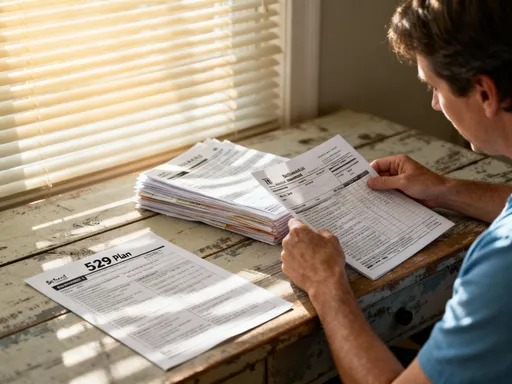
For years, I believed I was on the right path. Every month, a portion of my paycheck went into my pension account. I saw the balance grow slowly and assumed that, over time, it would be enough to support me in retirement. I didn’t question the funds I was invested in, nor did I evaluate whether my contribution rate matched my future needs. Like many, I operated on trust—trust that the system was working, that my employer’s default options were optimal, and that time would take care of the rest. But a routine financial review changed everything.
During that review, I projected my current savings rate forward, accounting for inflation, expected returns, and my desired retirement age. The result was unsettling: my pension would cover only about 40% of my current lifestyle. I wouldn’t be able to maintain the same standard of living—no travel, no dining out, no home maintenance without stress. The gap was too wide to ignore. That moment was a wake-up call. I realized that saving money wasn’t the same as planning for retirement. I had been focused on the act of saving, not the outcome of security. The emotional weight of this discovery was heavy. I felt both anxious and motivated—afraid of falling short, but determined to fix it.
What followed was a deep dive into my pension structure. I examined the underlying funds, their fees, historical performance, and asset allocation. I discovered that many of the funds were overly conservative for my age, with too much exposure to low-yielding bonds and cash. Others carried high management fees that quietly eroded returns. I also realized I had no clear strategy for adjusting my investments over time. My pension wasn’t failing because I wasn’t saving—it was failing because it lacked direction. This realization shifted my mindset. I stopped seeing retirement planning as a passive activity and began treating it as an active, ongoing process that required attention, education, and intention.
Why a Systematic Investment Layout Beats Random Saving
Before my wake-up call, my approach to saving was haphazard. I contributed when I remembered, adjusted funds when a friend recommended something, and avoided checking my account when the market dipped. This kind of random saving may create the illusion of progress, but it lacks the discipline needed for long-term success. It’s like planting seeds without knowing the soil, climate, or season—some may grow, but most will struggle. A systematic investment layout, on the other hand, is like farming with a plan: you prepare the land, choose the right crops, rotate fields, and harvest at the right time.
A systematic layout means organizing your investments with purpose. It starts with defining your goals—when you want to retire, what kind of lifestyle you want, and how much income you’ll need each year. From there, you build an asset allocation strategy that aligns with your time horizon and risk tolerance. This isn’t about predicting the market or picking the next hot stock. It’s about creating a balanced structure that grows steadily and protects against major losses. For me, this meant moving away from emotional decisions and toward rules-based investing. I set clear guidelines for how much to allocate to different asset classes and when to adjust them.
The power of this approach lies in its consistency. When you have a system, you’re less likely to panic during market downturns or chase gains during rallies. You follow the plan, not the headlines. I began to see my pension not as a collection of funds, but as a coordinated portfolio with a mission. Each dollar had a role—some were working for long-term growth, others were preserving capital, and a portion was generating income. This shift in perspective brought clarity. I wasn’t just saving; I was building a financial machine designed to last. Over time, the compounding effect of disciplined, systematic investing far outpaced the inconsistent results of my earlier, reactive approach.
Mapping the Core: Building Blocks of My Investment Structure
To create a sustainable retirement plan, I divided my portfolio into three core components: growth, income, and stability. Each serves a distinct purpose and works together to support long-term financial health. The growth segment is made up of diversified equities—broad-market index funds and low-cost exchange-traded funds (ETFs) that track global stock markets. These assets have higher volatility in the short term but offer the best chance for long-term appreciation. Because I was still years away from retirement, I allocated a significant portion of my early contributions here. This allowed me to benefit from compounding returns over decades.
The income segment includes dividend-paying stocks, real estate investment trusts (REITs), and high-quality bonds. These assets generate regular cash flow, which becomes increasingly important as retirement approaches. I didn’t rely on speculative dividend stocks or high-yield bonds with hidden risks. Instead, I focused on stable, well-established companies and government-backed securities that have a history of consistent payouts. This portion of the portfolio doesn’t aim for rapid growth, but rather reliable returns that can eventually cover living expenses without eroding the principal.
The stability segment acts as a buffer against market shocks. It includes cash reserves, short-term bonds, and inflation-protected securities. This part of the portfolio doesn’t generate high returns, but it provides peace of mind. During periods of market stress, I could rebalance without selling growth assets at a loss. I also used this segment to hold emergency funds that were separate from my retirement savings, ensuring I wouldn’t need to withdraw from my pension in a crisis. Together, these three building blocks created a balanced, resilient structure. As my retirement date drew closer, I adjusted the proportions—reducing growth exposure and increasing income and stability—according to a pre-defined plan, not market noise.
Timing Matters: Aligning Investments with Life Stages
One of the most important lessons I learned was that the right investment at the wrong time can still lead to poor outcomes. Early in my career, I had a higher risk tolerance because I had time to recover from market downturns. A 20% drop in my portfolio was painful, but not catastrophic, because I wouldn’t need the money for 30 years. As I moved into my 40s and 50s, that calculus changed. With retirement on the horizon, I could no longer afford to wait out extended bear markets. This is where time-based allocation became essential.
I adopted a gradual shift in my asset mix, often referred to as a “glide path.” In my 30s and early 40s, my portfolio was weighted heavily toward equities—around 80% in growth assets and 20% in income and stability. As I approached my 50s, I began systematically reducing my equity exposure by a few percentage points every few years. This wasn’t a reaction to market conditions; it was a planned evolution. By the time I reached my mid-50s, my allocation had shifted to roughly 50% equities, 30% income-generating assets, and 20% stability holdings. This adjustment helped protect my accumulated savings from sudden downturns while still allowing for moderate growth.
Timing also influenced my contribution strategy. I increased my savings rate during high-income years and took advantage of employer matching programs whenever available. I avoided making large, emotional shifts based on short-term performance. Instead, I followed a calendar-based review schedule—every 12 to 18 months—to assess whether my allocation still aligned with my timeline and goals. This disciplined approach removed guesswork and reduced the temptation to time the market, which research consistently shows is a losing strategy for most investors. By syncing my investments with life stages, I ensured that my portfolio evolved in a way that matched my changing needs and risk profile.
Risk Control: Protecting My Future from Market Swings
Market volatility is inevitable. What separates successful investors from those who fall short is not their ability to predict downturns, but their ability to stay the course. I learned this the hard way during a major market correction when my portfolio lost nearly 25% of its value in a few months. My first instinct was to sell everything and move to cash. But I remembered my plan. I reviewed my allocation, confirmed that my long-term goals hadn’t changed, and decided to hold steady. Within 18 months, the market recovered, and my portfolio not only regained its losses but continued to grow.
This experience taught me the importance of built-in risk controls. The first was diversification—spreading my investments across different asset classes, geographic regions, and industries. I avoided putting too much money into any single stock, sector, or country. This reduced the impact of any one failure on my overall portfolio. I also made sure not to over-concentrate in my employer’s stock, a common mistake that can lead to significant losses if the company struggles.
The second control was periodic rebalancing. Over time, some assets grow faster than others, causing the original allocation to drift. For example, a strong stock market might increase my equity exposure from 60% to 75%, making my portfolio riskier than intended. I set a rule to rebalance annually or when any asset class deviated by more than 5% from its target. This meant selling some of the outperforming assets and buying more of the underperforming ones—a disciplined way to “buy low and sell high” without emotion.
Finally, I established clear risk boundaries. I defined my maximum acceptable loss and structured my portfolio so that even in a severe downturn, I wouldn’t be forced to make drastic changes. I also maintained liquidity outside of my pension to cover unexpected expenses, so I wouldn’t need to withdraw from retirement accounts during downturns. These safeguards didn’t eliminate risk, but they made it predictable and manageable. They gave me the confidence to stay invested through turbulence, knowing my plan was designed to endure.
Practical Tweaks That Made a Real Difference
Some of the most impactful changes I made were surprisingly simple. I started by reviewing my fund choices and eliminating those with high expense ratios. I discovered that some of my old funds charged over 1% in annual fees—seemingly small, but over 20 years, that could cost tens of thousands in lost returns. I switched to low-cost index funds and ETFs, which typically charge less than 0.20%. This single change didn’t boost my returns overnight, but over time, it significantly improved my net gains.
I also automated my contributions. Instead of manually transferring money each month, I set up a direct deposit from my paycheck into my pension account. This ensured consistency and removed the temptation to skip a payment when money was tight. I treated retirement savings like a non-negotiable bill—just like rent or utilities. Automation also extended to rebalancing. I used tools provided by my financial institution to schedule annual portfolio reviews and automatic adjustments, which kept my allocation on track without requiring constant attention.
Another key habit was ignoring financial noise. I stopped checking my account daily and unsubscribed from sensational market newsletters. I realized that most financial headlines were designed to provoke emotion, not inform decisions. Instead, I focused on long-term trends and stuck to my plan. I also educated myself by reading reputable sources, attending financial workshops, and consulting with a fee-only financial advisor every few years to validate my strategy. These small, consistent actions didn’t require expert knowledge—just discipline and commitment. But over time, they compounded into substantial progress, turning uncertainty into confidence.
Looking Back, Moving Forward: A System That Works Long-Term
Today, my retirement plan feels solid—not because I picked winning stocks or timed the market perfectly, but because I built a process that endures. The investment layout I created is flexible enough to adapt to life changes, strong enough to withstand market swings, and clear enough to follow without constant supervision. I no longer lie awake wondering if I’ll have enough. Instead, I trust the system. I know that as long as I continue to contribute consistently, review my plan regularly, and stick to my allocation, I’m moving in the right direction.
Looking back, the biggest shift wasn’t financial—it was mental. I moved from feeling helpless to feeling in control. I stopped seeing retirement as a distant, uncertain event and began viewing it as a destination with a roadmap. The journey taught me that success isn’t about having the most money, but about making thoughtful, intentional choices. It’s about structure over speculation, discipline over drama, and patience over panic.
For anyone feeling lost about their pension savings, I offer this insight: the answer isn’t necessarily to save more—it’s to save smarter. A well-designed investment layout transforms uncertainty into clarity. It turns abstract fears into actionable steps. It gives you the confidence to keep going, even when the market stumbles. You don’t need to be a financial expert to build a secure future. You just need a plan, the willingness to learn, and the courage to start. And once you do, you’ll find that retirement isn’t something to fear—it’s something to look forward to, with peace of mind and purpose.